
Prime Minister Narendra Modi stayed calm, avoided public confrontation, and focused on India's long-term interests to steady ties with the United States.
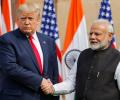
The China threat continues to resonate in the strategic partnership between India and the USA, points out Rup Narayan Das.

'We should watch -- in the near term -- for signs that the two have totally fallen out at a personal, political level.' 'Trump and Modi know how to be dealmakers, but they also know how to hold a grudge.'
India-US relations, like Rome, were not built in a day, nor can they be demolished in a day.
All said and done, when the new global order emerges, India can only remain with the democracies, asserts Ambassador T P Sreenivasan.
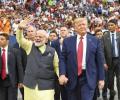
No single individual, institution, or action is to blame for this. The BJP is responding in kind -- definitely not without checking with its government. And they wait for Mr Trump, notes Shekhar Gupta.

'The border deal offers a hedge for India against Trump's unpredictability when it comes to his approach to competition with China.'
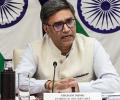
The United States has approved the extradition of Tahawwur Rana, accused of involvement in the 2008 Mumbai terror attacks, to India. The decision was announced by President Donald Trump during a joint press conference with Prime Minister Narendra Modi in the White House. India is currently working on the logistics of Rana's surrender and extradition, with several final steps to be completed before he is sent back to India. The joint statement issued by India and the US during Prime Minister Modi's visit reaffirmed their commitment to fighting terrorism and eliminating terrorist safe havens. The leaders also called on Pakistan to bring to justice the perpetrators of the 26/11 Mumbai and Pathankot attacks. Rana, a Canadian national of Pakistani origin, is currently lodged at a metropolitan detention center in Los Angeles. He is associated with Pakistani-American terrorist David Coleman Headley, one of the main conspirators of the 26/11 attacks.
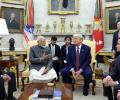
'By his words, actions, and body language during their joint press appearance wanted to convey his personal respect and, more broadly, his desire to work closely with India.'

New Delhi has reached out to Moscow while waiting for a new president in Washington. New Delhi knows well that in international relations, there are no permanent friends or foes, only permanent national interests, points out Dr Rup Narayan Das.
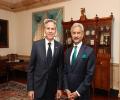
India and the US agreed to continue their cooperation in the areas of defence, space and clean energy as External Affairs Minister S Jaishankar met Secretary of State Antony Blinken here, amid a simmering diplomatic row between India and Canada over the killing of a Khalistani separatist.

'The United States should not, by this logic, expect India to create military distractions along the Line of Actual Control, hold up Chinese shipping in the Indian Ocean, or even openly provide intelligence or basing for US forces transiting the region.'

'This is the first time that the Americans have agreed to refer to "cross-border terrorist attacks" in a joint statement.' 'No wonder Pakistan has called the joint statement "singularly unhelpful" and has blasted it, and its all-weather friend China has applauded Pakistan's frontline role in combating terrorism,' points out former foreign secretary Ambassador Kanwal Sibal.
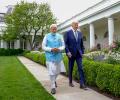
'India will want a lot of help from the US, but it's not going to want US troops.'

'This incident offers ammunition to those inside the US government and elsewhere who question the wisdom of trusting India, so it will have a lasting consequence no matter how it is managed.'
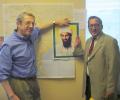
'Steve was the foremost strategic analyst on South Asia,' remembers Colonel Anil A Athale (retd).

This visit has ended on a vastly different note in comparison with Modi's previous visits. Call it a rebuke, call it a censure, call it a distancing from Modi, the sharp message would have gone home, observes Ambassador M K Bhadrakumar.
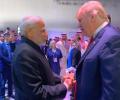
'India will come increasingly in the US crosshairs if it insists on maintaining its strategic autonomy, warns Ambassador M K Bhadrakumar.

The perfunctory management of external affairs has left India's foreign policy establishment largely unprepared to manage the consequences of dramatic international developments, says Nitin Pai.

Brookings Institution tries 'Re-imagining India.' Aziz Haniffa listens in

'In the time I have been an Indiawallah, I have seen three US Presidential visits to India, nuclear sanctions, nuclear cooperation, a border conflict with Pakistan, the growth of IT services, a government losing a confidence vote, and so much more,' Rick Rossow, the new Wadhwani Chair in US-India Policy Studies tells Rediff.com's Aziz Haniffa.

Days before Narendra Modi arrives in the US to speak at the UN, meet Barack Obama, gupshup with the likes of Nadella, Pichai, Zuckerberg, and address desis in Silicon Valley, his ministers will help set the commercial and strategic tone for the prime minister's visit.
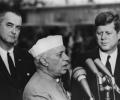
As Prime Minister Narendra Modi begins his historic visit of the United States of America, here's a look at some landmark visits by Indian prime ministers to the United States of America.
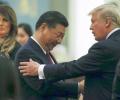
'While many Chinese policy makers dismiss the political, economic and technological component of US-India relations, they express caution on the defence-related ties which also happens to be a major driver in US-India relations,' explains China expert Srikanth Kondapalli.

'India is no longer the India of the '70s and the '80s.' 'It's a large country with the fastest growing economy.' 'In working with India, you just can't go and humiliate the nation publicly.' USIBC President Mukesh Aghi tells Aziz Haniffa/Rediff.com about how he advises American companies to do business with India, what he thinks of Modi's government and the way forward for the India-US relationship.

North Korea is unlikely to strike first, but its response in retaliation, if attacked, could be massive even at the expense of its own destruction, says Rajaram Panda.

This is the joint statement issued by the ministry of external affairs on the visit of US President Barack Obama to India.

'India may be new to world politics and her military strength insignificant in comparison with that of the giants of our epoch.' 'But India is old in thought and experience and has travelled through trackless centuries in the adventure of life.' 'Throughout her long history she has stood for peace and every prayer that an Indian raises, ends with an invocation to peace.' Jawaharlal Nehru's memorable speech to the United States Congress.

'In the past the US has been reluctant to name Pakistan directly in an US-India joint statement.'

The founder of the Republican Hindu Coalition first attracted attention in the US as the "Punjabi tycoon" who was a huge supporter of Narendra Modi in the US. 'He will be best for India. There is no better ally for the US than India in the region,' Shalabh Kumar tells Rediff.com's Vaihayasi Pande Daniel.
